




Ricardo Sánchez Serra*
Por mi ADN corre apenas un cinco por ciento de sangre judía. Pero mi alma se identifica cien por ciento con ellos. Con sus virtudes y sus errores. Con su historia milenaria, con su dolor, con su luz. Porque ser judío no es solo pertenecer: es recordar, resistir, reconstruir.
Más de cinco mil años en Israel. Más de cinco mil años de pactos, de exilios, de reconstrucciones. El pueblo judío ha sido perseguido por imperios, por cruzadas, por inquisiciones, por ideologías modernas que disfrazan el odio con discursos de justicia. Desde Babilonia hasta Berlín, desde Roma hasta Moscú, desde el Reino de España hasta los campos de exterminio. Y aún así, aquí están. Vivos.
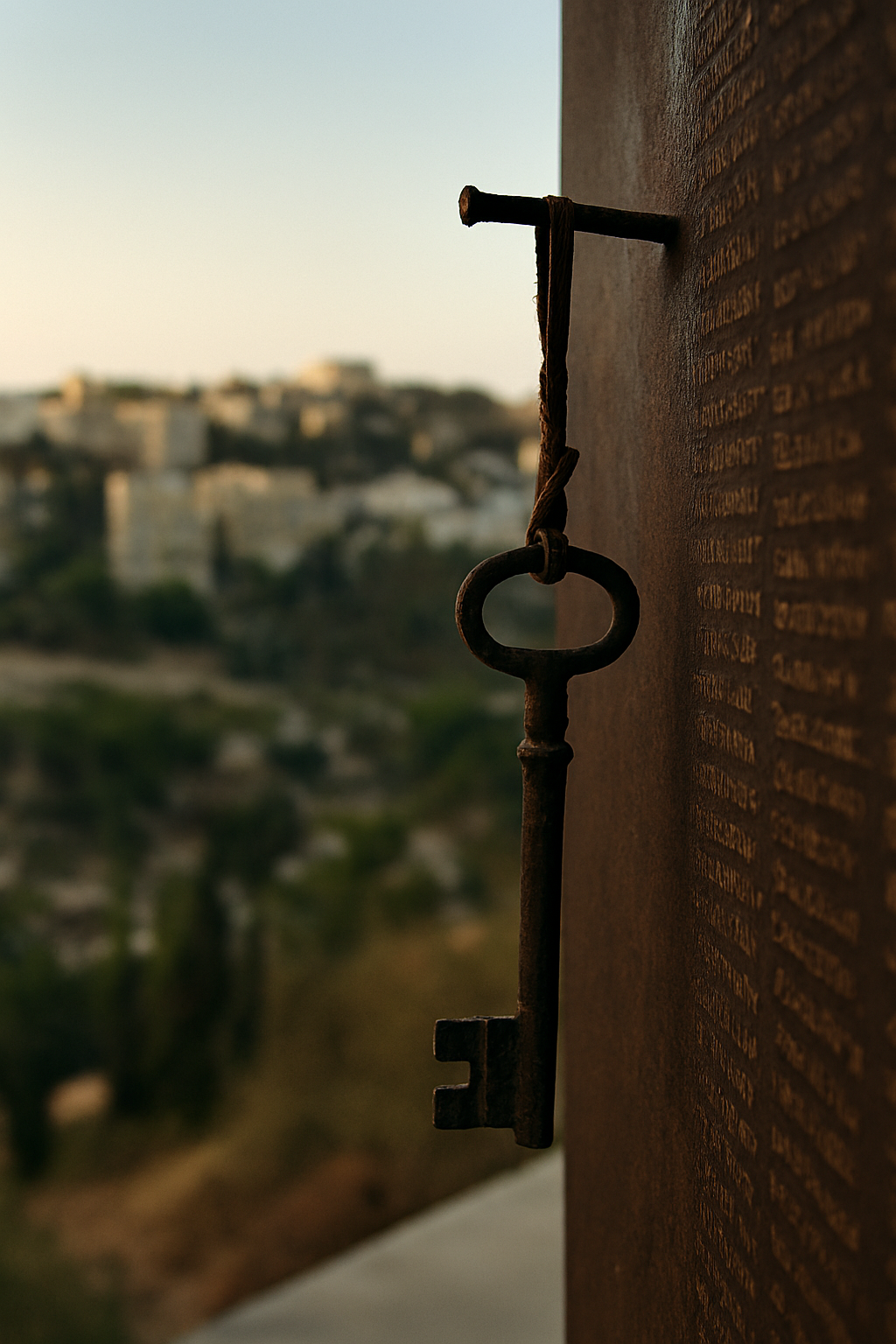
Muchos fueron expulsados en 1492, cuando el Reino de España cerró sus puertas y abrió el exilio. Pero no se llevaron solo maletas: se llevaron llaves. Llaves de casas que ya no existen, pero que aún cuelgan del cuello de sus descendientes. Llaves que no abren puertas, pero sí memorias. En Salónica, en Estambul, en Fez, los judíos ladinos siguieron hablando el idioma de Cervantes, como si el exilio no pudiera borrar la lengua del alma.
Luego vinieron las cruzadas, que decían rescatar Jerusalén mientras arrasaban comunidades enteras. Vinieron los pogromos, las conversiones forzadas, las humillaciones públicas. Y después, el siglo XX. El Holocausto. Auschwitz. Treblinka. Los trenes sin retorno. Las cámaras de gas. Todos tenemos algún pariente -aunque sea en la memoria universal- que fue silenciado por el nazismo. ¿Cómo olvidar? ¿Cómo no estremecerse ante el eco de los nombres borrados?
Visitar Yad Vashem es mirar al abismo. Es ver las cenizas de nuestros antecesores, los gritos congelados en vitrinas, los zapatos de niños que nunca volvieron. Es ver al humano que se deshumaniza. Es preguntarse, con el alma rota: ¿cómo pudo suceder esto? Y no hay respuesta. Solo silencio. Solo memoria. Solo la promesa de no repetir.
Y cuando el mundo prometió “nunca más”, vino el antisionismo. La nueva máscara del mismo veneno. Nos dijeron que no podíamos tener patria, que no podíamos defendernos, que no podíamos llorar a nuestros muertos sin ser acusados. Nos acusaron de controlar el mundo, de conspirar, de manipular. La mentira de Los Protocolos de los Sabios de Sion sigue circulando como si el odio no tuviera fecha de caducidad.
Y ahora, Gaza. Otra herida abierta. Otra página escrita con sangre y rehenes. Nos critican, nos condenan, nos señalan. Pero yo quiero vivos a mis secuestrados. No quiero que sus nombres se pierdan entre cifras, ni que sus rostros se diluyan en titulares. Son hijos, madres, abuelos. Son parte de esa llama que no se apaga. Y mientras el mundo debate, nosotros rezamos. Mientras otros justifican, nosotros buscamos. Porque cada vida importa. Porque cada rehén es una llave más que no debe oxidarse.
Israel no es solo un país. Es el refugio de los que no tenían dónde volver. Es el hogar de los que guardaron llaves durante siglos. Es la respuesta a quienes dijeron que no merecíamos existir. Y por eso, hay quienes quieren destruirlo. No por lo que hace, sino por lo que representa: la dignidad de un pueblo que no se rinde. “El pueblo judío ha sobrevivido no porque haya sido más fuerte, sino porque ha sabido recordar”, afirmaba Simon Wiesenthal
Si yo fuera judío -y quizás lo soy, aunque sea en espíritu- caminaría con la frente en alto, con la llave colgando del alma, con la historia en la espalda y con la esperanza en el corazón. Porque ser judío es haber sido perseguido por imperios… y aún así, estar vivo.
Y si el mundo insiste en olvidar, yo insistiré en recordar. Porque la memoria es resistencia. Y la vida, después de todo, es el mayor acto de fe.
*Premio Mundial de Periodismo “Visión Honesta 2023”
If I were jewish: The keys still hanging from the soul
Ricardo Sánchez Serra World Journalism Prize “Honest Vision 2023”
Only five percent of my DNA carries Jewish blood. But my soul identifies one hundred percent with them. With their virtues and their flaws. With their millennial history, their pain, their light. Because being Jewish is not just about belonging: it is about remembering, resisting, rebuilding.
More than five thousand years in Israel. More than five thousand years of covenants, exiles, and reconstructions. The Jewish people have been persecuted by empires, by crusades, by inquisitions, by modern ideologies that disguise hatred as justice. From Babylon to Berlin, from Rome to Moscow, from the Kingdom of Spain to the extermination camps. And yet, here they are. Alive.
Many were expelled in 1492, when the Kingdom of Spain closed its doors and opened the gates of exile. But they didn’t just take suitcases: they took keys. Keys to homes that no longer exist, but still hang from the necks of their descendants. Keys that don’t open doors, but unlock memories. In Salonika, in Istanbul, in Fez, Ladino Jews continued speaking the language of Cervantes, as if exile could never erase the tongue of the soul.
Then came the Crusades, claiming to rescue Jerusalem while destroying entire communities. Came the pogroms, the forced conversions, the public humiliations. And then, the 20th century. The Holocaust. Auschwitz. Treblinka. Trains with no return. Gas chambers. We all have a relative —even if only in universal memory— who was silenced by Nazism. How can we forget? How not to tremble before the echo of erased names?
And in the midst of that silence, many still whisper the name of God. Not as an answer, but as a companion. Because even when everything was lost, faith was the last thing to fade. In the camps, in the cellars, in the final breaths, the Shema Yisrael was heard: “Hear, O Israel, the Lord is our God, the Lord is One.”
Visiting Yad Vashem is staring into the abyss. It is seeing the ashes of our ancestors, the screams frozen in glass cases, the shoes of children who never came back. It is witnessing the human being stripped of humanity. It is asking, with a broken soul: How could this happen? And there is no answer. Only silence. Only memory. Only the promise not to repeat.
And when the world promised “never again,” anti-Zionism arrived. The new mask of the same poison. They told us we couldn’t have a homeland, couldn’t defend ourselves, couldn’t mourn our dead without being accused. They accused us of controlling the world, of conspiring, of manipulating. The lie of The Protocols of the Elders of Zion still circulates, as if hatred had no expiration date.
And now, Gaza. Another open wound. Another page written in blood and hostages. They criticize us, condemn us, point fingers. But I want my kidnapped loved ones alive. I don’t want their names lost in statistics, nor their faces diluted in headlines. They are sons, mothers, grandparents. They are part of that flame that never goes out. And while the world debates, we pray. While others justify, we search. Because every life matters. Because every hostage is another key that must not rust.
Israel is not just a country. It is the refuge of those who had nowhere to return. It is the home of those who kept keys for centuries. It is the answer to those who said we didn’t deserve to exist. And that is why some want to destroy it. Not for what it does, but for what it represents: the dignity of a people that does not surrender. “The Jewish people have survived not because they were stronger, but because they knew how to remember«, say Simon Wiesenthal
If I were Jewish —and perhaps I am, at least in spirit— I would walk with my head held high, with the key hanging from my soul, with history on my back and hope in my heart. Because being Jewish means having been persecuted by empires… and still being alive.
And if the world insists on forgetting, I will insist on remembering. Because memory is resistance. And life, after all, is the greatest act of faith.
