
Ricardo Sánchez Serra
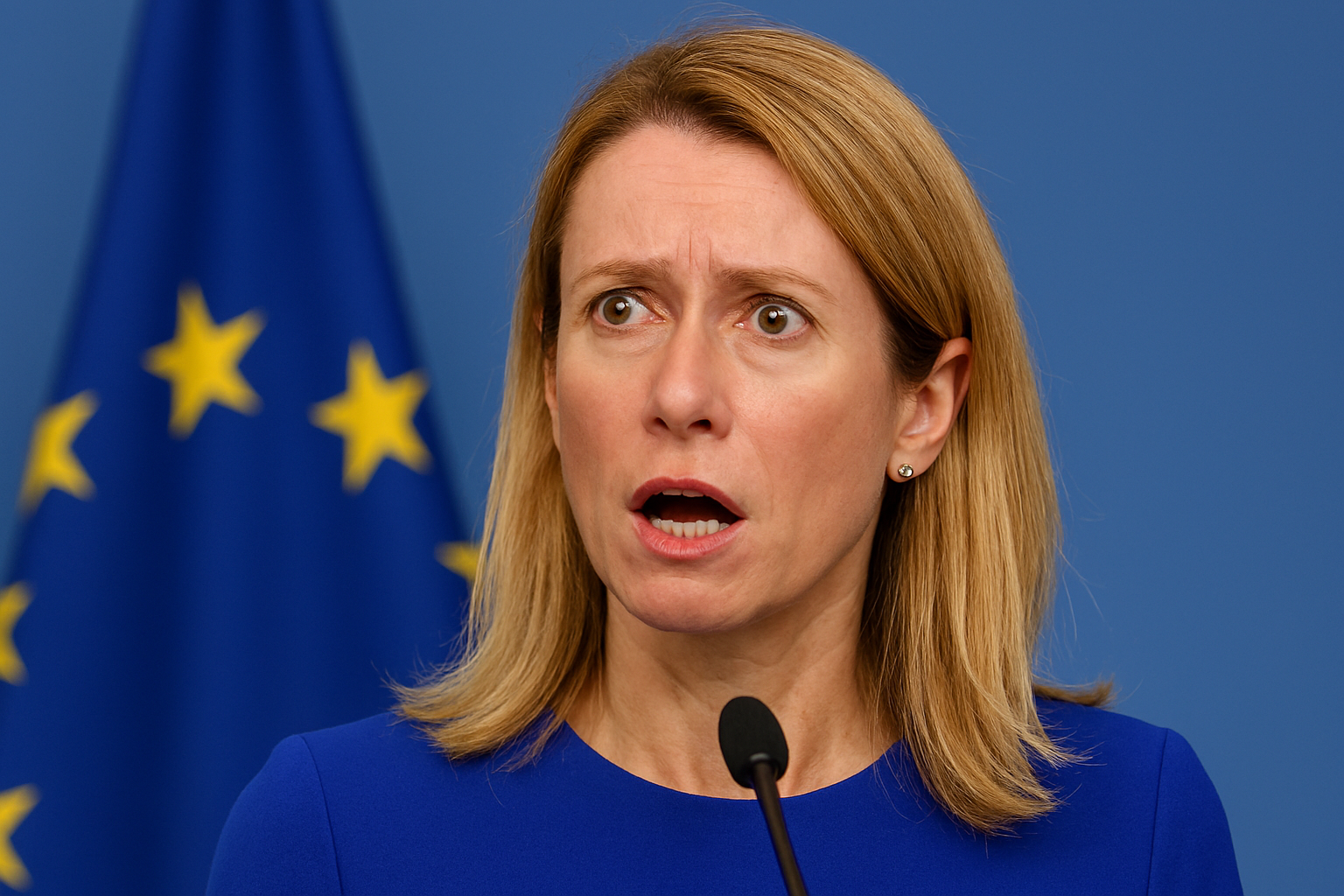
La frase “Calladita se ve bonita” ha circulado con fuerza en círculos diplomáticos tras las recientes declaraciones de Kaja Kallas, actual jefa de la diplomacia europea. En una entrevista conmemorativa por el fin de la Segunda Guerra Mundial, Kallas afirmó que “la Unión Soviética no liberó Europa del nazismo, simplemente reemplazó una ocupación por otra”.
La afirmación no solo es históricamente inexacta, sino profundamente ingrata. La URSS perdió más de 27 millones de vidas en la guerra contra el nazismo, y fue el Ejército Rojo quien rompió el espinazo de la maquinaria de Hitler en Stalingrado, Kursk y Berlín. Sin ese sacrificio, Europa no habría sido liberada. Kallas parece olvidar que la historia no se puede reducir a consignas ideológicas ni a resentimientos heredados.
No es la primera vez que sus palabras generan desconcierto. En su primer viaje oficial como jefa de la diplomacia europea, declaró en Kiev que “la Unión Europea quiere que Ucrania gane esta guerra”, rompiendo con la prudencia institucional que Bruselas había mantenido. Más recientemente, acusó a Rusia de “burlarse de la paz” tras un ataque en Ucrania, sin matizar ni abrir espacio para la negociación. También propuso compensar el retiro de ayuda militar estadounidense sin consultar a Francia, Italia ni España, lo que generó tensiones internas en la UE.
Lo más preocupante es que Kallas no tiene formación diplomática. Es abogada de profesión, con experiencia en derecho comercial y empresarial, pero nunca ha ejercido funciones diplomáticas antes de asumir el cargo más alto en la política exterior europea. Su paso por el Parlamento Europeo se centró en temas digitales y de consumo, no en relaciones internacionales ni resolución de conflictos. Su nombramiento responde más a equilibrios partidarios que a méritos diplomáticos. Y eso se nota.
Kallas proviene de un país con menos población que la ciudad de Trujillo, y con una historia compleja que ella misma parece simplificar. Durante la Segunda Guerra Mundial, miles de estonios colaboraron con el régimen nazi, formando unidades como la Legión Estonia dentro de las Waffen SS. Y aunque Estonia sufrió la ocupación soviética, su economía sobrevivió durante décadas gracias a sus ventas a la URSS, especialmente en sectores como la energía, la minería y la industria química. No se trata de elogiar el sistema soviético, sino de reconocer que la integración económica con Moscú permitió sostener empleo, infraestructura y comercio en tiempos difíciles.
Hoy, Estonia presume de una economía digital avanzada, pero en 2025 apenas crece un 1.1 %, afectada por la caída de inversiones y el enfriamiento del consumo interno. El desempleo supera el 7 % y su dependencia de exportaciones hacia países nórdicos y Alemania la vuelve vulnerable.
Lo que más sorprende, sin embargo, además de su desconocimiento histórico y su falta de preparación, es su actitud beligerante. En lugar de buscar la paz, como se espera de una canciller europea, o de cualquier ministro de Relaciones Exteriores, busca la guerra. Y en tiempos de conflicto, eso no es liderazgo: es imprudencia.
Kallas debe recordar, aunque es pedirle mucho, las palabras del gran mariscal soviético Georgy Zhukov, uno de los arquitectos de la victoria sobre el nazismo: “No luchamos por gloria, sino para que Europa viviera”.
Kaja Kallas: High Representative or High Improvisation? By Ricardo Sánchez Serra
The phrase “She looks prettier when she’s quiet” has echoed through diplomatic circles following the recent statements by Kaja Kallas, the current head of European diplomacy. In an interview commemorating the end of World War II, Kallas claimed that “the Soviet Union did not liberate Europe from Nazism—it merely replaced one occupation with another.”
This statement is not only historically inaccurate, but profoundly ungrateful. The USSR lost over 27 million lives in the war against Nazism, and it was the Red Army that broke the spine of Hitler’s war machine in Stalingrad, Kursk, and Berlin. Without that sacrifice, Europe would not have been liberated. Kallas seems to forget that history cannot be reduced to ideological slogans or inherited resentments.
It’s not the first time her words have caused confusion. On her first official trip as EU foreign policy chief, she declared in Kyiv that “the European Union wants Ukraine to win this war,” breaking with the institutional prudence Brussels had maintained. More recently, she accused Russia of “mocking peace” after a strike in Ukraine, without nuance or offering space for negotiation. She also proposed compensating for the withdrawal of U.S. military aid without consulting France, Italy, or Spain—causing internal tensions within the EU.
What’s most concerning is that Kallas has no diplomatic background. She is a lawyer by training, with experience in commercial and corporate law, but had never held diplomatic office before assuming the highest post in European foreign policy. Her time in the European Parliament focused on digital and consumer issues—not international relations or conflict resolution. Her appointment seems more the result of political balancing than diplomatic merit. And it shows.
Kallas comes from a country with fewer inhabitants than the city of Trujillo, Peru, and with a complex history she herself tends to oversimplify. During World War II, thousands of Estonians collaborated with the Nazi regime, forming units such as the Estonian Legion within the Waffen SS. And although Estonia suffered Soviet occupation, its economy survived for decades thanks to exports to the USSR, especially in energy, mining, and chemical industries. This is not to praise the Soviet system, but to acknowledge that economic integration with Moscow helped sustain jobs, infrastructure, and trade in difficult times.
Today, Estonia boasts a modern digital economy, but in 2025 it is growing by only 1.1%, affected by declining investment and cooling domestic consumption. Unemployment exceeds 7%, and its dependence on exports to Nordic countries and Germany makes it vulnerable.
What’s most surprising, however, beyond her historical ignorance and lack of preparation, is her belligerent attitude. Instead of seeking peace—as expected of a European foreign minister—she seems to seek war. And in times of conflict, that’s not leadership: it’s recklessness.
Kallas should remember—though it may be asking too much—the words of Soviet Marshal Georgy Zhukov, one of the architects of victory over Nazism: “We did not fight for glory, but so that Europe could live.”
Кая Каллас: высокий представитель или высокая импровизация? Рикардо Санчес Серра
Фраза «Молчи — красивее» широко распространилась в дипломатических кругах после недавних заявлений Каи Каллас, нынешнего главы европейской дипломатии. В интервью, приуроченном к годовщине окончания Второй мировой войны, Каллас заявила: «Советский Союз не освободил Европу от нацизма, он просто заменил одну оккупацию другой».
Это утверждение не только исторически неточно, но и глубоко неблагодарно. СССР потерял более 27 миллионов жизней в войне против нацизма, и именно Красная армия сломала хребет гитлеровской машины под Сталинградом, Курском и в Берлине. Без этой жертвы Европа не была бы освобождена. Каллас, похоже, забывает, что историю нельзя сводить к идеологическим лозунгам и наследованным обидам.
Это не первый случай, когда её слова вызывают недоумение. Во время своей первой официальной поездки в Киев в качестве главы европейской дипломатии она заявила: «Европейский союз хочет, чтобы Украина выиграла эту войну», нарушив осторожную институциональную линию, которую Брюссель придерживался с начала конфликта. Недавно она обвинила Россию в «издевательстве над миром» после одного из ударов по Украине, не уточнив и не предложив путь к переговорам. Также она предложила компенсировать сокращение американской военной помощи без консультаций с Францией, Италией и Испанией, что вызвало внутренние напряжения в ЕС.
Наиболее тревожно то, что Каллас не имеет дипломатического образования. По профессии она юрист, с опытом в коммерческом и корпоративном праве, но никогда не занимала дипломатических должностей до назначения на высший пост в европейской внешней политике. Её работа в Европарламенте была сосредоточена на цифровых и потребительских вопросах, а не на международных отношениях или разрешении конфликтов. Её назначение — скорее результат партийного баланса, чем дипломатических заслуг. И это заметно.
Каллас родом из страны с населением меньше, чем у города Трухильо, и с историей, которую она сама склонна упрощать. Во время Второй мировой войны тысячи эстонцев сотрудничали с нацистским режимом, формируя подразделения, такие как Эстонский легион в составе войск СС. И хотя Эстония пережила советскую оккупацию, её экономика десятилетиями выживала благодаря экспорту в СССР, особенно в сферах энергетики, горнодобычи и химической промышленности. Речь не о восхвалении советской системы, а о признании того, что экономическая интеграция с Москвой позволила сохранить занятость, инфраструктуру и торговлю в трудные времена.
Сегодня Эстония гордится своей цифровой экономикой, но в 2025 году её рост составляет всего 1,1 %, пострадав от снижения инвестиций и охлаждения внутреннего потребления. Уровень безработицы превышает 7 %, а зависимость от экспорта в северные страны и Германию делает её уязвимой.
Однако больше всего удивляет не её историческое невежество и отсутствие подготовки, а воинственная позиция. Вместо того чтобы стремиться к миру, как и положено европейскому канцлеру или любому министру иностранных дел, она стремится к войне. А в условиях конфликта это не лидерство — это безрассудство.
Каллас должна помнить, хотя это, возможно, слишком много просить, слова великого советского маршала Георгия Жукова, одного из архитекторов победы над нацизмом: «Мы сражались не ради славы, а ради того, чтобы Европа жила».